Ductless Mini-Splits vs. Central AC: Which Is Right for Your Home?
If you are cooling a North Jersey home this summer, you have two main paths: a central air system that pushes cooled air through ductwork, or a ductless mini-split that delivers cooling directly to each room. Both keep a house comfortable, but they suit very different homes and budgets. Here is how they compare on the things that actually matter.
How each system works
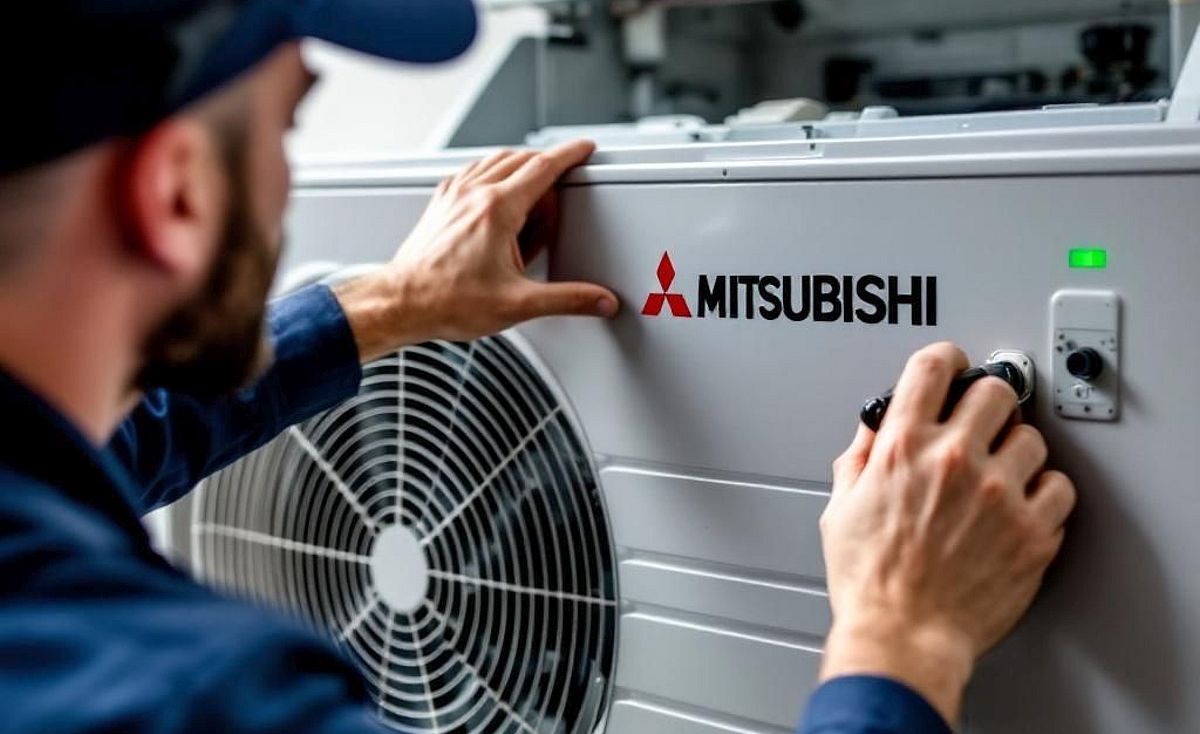
Central air uses one outdoor condenser connected to an indoor coil and a network of ducts that carry conditioned air to every room. A ductless mini-split skips the ducts entirely. An outdoor unit connects to one or more wall-mounted indoor heads, each cooling its own space. As a Mitsubishi Diamond Contractor, we install some of the most efficient mini-split equipment on the market.
Cost and efficiency
Central air usually has a lower upfront cost when the home already has good ductwork in place. If there are no ducts, though, installing them is expensive and invasive, which is exactly where mini-splits shine. A ductless system avoids the duct losses that can waste 20 to 30 percent of the energy in a forced-air system, so it often runs more efficiently month to month.
Mini-splits also let you cool only the rooms in use rather than the whole house. For a family that spends evenings in two or three rooms, that targeted cooling adds up to real savings over a summer. Many models carry higher efficiency ratings than comparable central systems, and their inverter-driven compressors ramp up and down instead of cycling fully on and off, which holds a steadier temperature and uses less energy.
Where central air pulls ahead is whole-house coverage with a single thermostat and no visible indoor equipment. If you value a completely uniform, out-of-sight system and already have the ductwork, that simplicity has real worth. The trade-off is the duct losses and the all-or-nothing nature of cooling every room whether or not anyone is in it.
Best use cases
Central air is the natural choice for homes that already have ductwork and want a single, out-of-sight system that cools the whole house evenly. Mini-splits make the most sense for older homes without ducts, finished attics and basements, home additions, sunrooms, and any space a central system never quite reaches.
If your problem is that the upstairs is always hotter than the downstairs, a dual-zone HVAC system can solve it either way, giving you independent temperature control for different parts of the house instead of fighting one thermostat.
It is also worth noting that a ductless mini-split is a heat pump at heart, so the same equipment that cools you in July heats the room efficiently in January. That makes ductless a year-round comfort solution, not just a summer add-on.
Which should you choose?
For a home with sound ductwork and a desire for whole-house cooling, a central AC installation is usually the most cost-effective route. For a home without ducts, a problem room, or a homeowner focused on long-term efficiency and zoning, ductless is hard to beat. Many North Jersey homes end up with a hybrid: central air for the main living areas and a mini-split for the spaces it cannot reach.
Whichever path you take, the result is only as good as the install. A system sized with a proper load calculation and kept on a regular maintenance schedule delivers the efficiency the label promises for years. We walk the house, look at the ductwork, and recommend the option that fits, not the one with the bigger ticket.
It is worth thinking past this summer. Both systems are long-term investments you will live with for a decade or more, so the decision should account for how you use the home, whether you are finishing a basement or adding a room down the road, and how much the monthly running cost matters to you. A short consultation with a load calculation removes the guesswork and makes sure the system is sized for your space rather than a rough estimate.
Frequently asked questions
Is a ductless mini-split cheaper than central air?
It depends on the home. If you already have good ductwork, central air is often cheaper to install. If you have no ducts, a mini-split is usually less expensive and far less invasive than adding a full duct system.
Can one mini-split cool a whole house?
A single indoor head cools one zone. A multi-zone mini-split with several heads can cool an entire home, with each room set to its own temperature. The right number of heads depends on the square footage and layout.
Do mini-splits work in New Jersey winters?
Yes. Modern Mitsubishi heat-pump mini-splits provide both cooling in summer and efficient heating through New Jersey winters, which makes them a year-round system rather than a summer-only one.
Need help from a local team? AMS Heating & Cooling serves Bergen County and Northern New Jersey from Ridgefield. Call (201) 886-2900 or request service online.